
HPRCA Pharmacist Syllabus 2026
Loading contents...
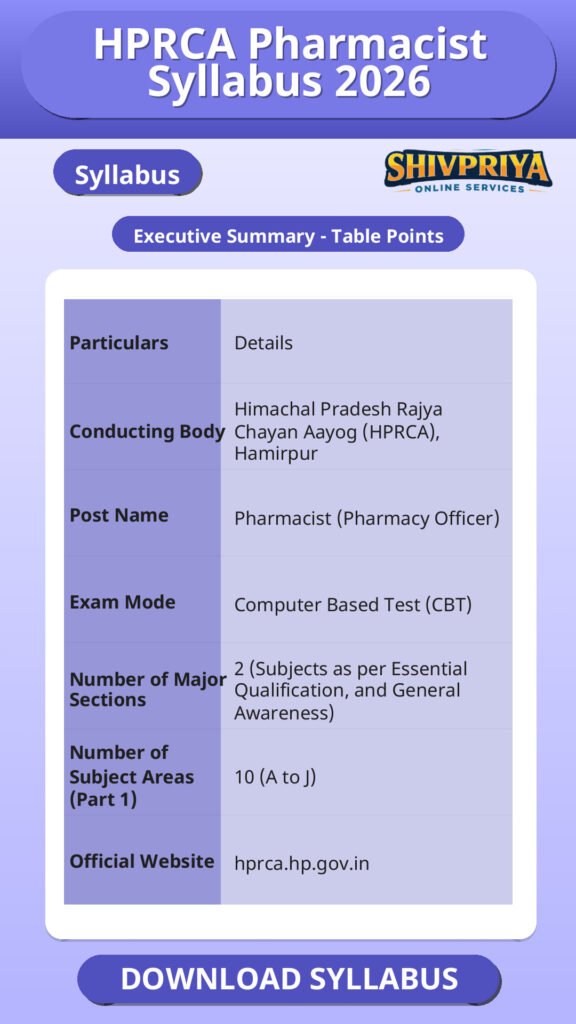
The Himachal Pradesh Rajya Chayan Aayog (HPRCA), Hamirpur, has released the detailed syllabus for the Computer Based Test (CBT) for the post of Pharmacist (Pharmacy Officer). This article covers the complete HPRCA Pharmacist syllabus 2026 subject-wise, based strictly on the official syllabus document, so candidates can plan their preparation accordingly.
Source
Vacancy/Update Name: HPRCA Pharmacist Syllabus 2026 – Quick Overview | Official Website: https://hprca.hp.gov.in/
HPRCA Pharmacist Syllabus 2026 – Quick Overview
| Particulars | Details |
|---|---|
| Conducting Body | Himachal Pradesh Rajya Chayan Aayog (HPRCA), Hamirpur |
| Post Name | Pharmacist (Pharmacy Officer) |
| Exam Mode | Computer Based Test (CBT) |
| Number of Major Sections | 2 (Subjects as per Essential Qualification, and General Awareness) |
| Number of Subject Areas (Part 1) | 10 (A to J) |
| Official Website | hprca.hp.gov.in |
यह परीक्षा दो मुख्य भागों में होती है: एक जरूरी योग्यता के अनुसार 10 विषय और दूसरा सामान्य जागरूकता। इससे उम्मीदवार अपनी तैयारी को दोनों हिस्सों में बांट कर बेहतर योजना बना सकते हैं।
HPRCA Pharmacist Syllabus 2026 – Structure
The HPRCA Pharmacist (Pharmacy Officer) CBT syllabus is divided into two broad parts:
- Part 1: Subjects as per Essential Qualification (A to J, covering core pharmacy subjects)
- Part 2: General Awareness
पहले भाग में फार्मेसी से जुड़े मुख्य विषय होते हैं जो उम्मीदवार की शैक्षिक योग्यता के आधार पर हैं, जबकि दूसरे भाग में सामान्य ज्ञान और जागरूकता शामिल है, जिससे उम्मीदवार का समग्र ज्ञान भी परखा जाता है।
HPRCA Pharmacist Syllabus 2026 – Direct Link
HPRCA has released the detailed syllabus for the Pharmacist (Pharmacy Officer) CBT 2026. The syllabus covers 10 subject areas under the essential qualification along with General Awareness, helping candidates plan their preparation subject-wise.
सिलेबस में सभी जरूरी विषय विस्तार से दिए गए हैं जिनके आधार पर उम्मीदवार अपनी तैयारी को व्यवस्थित और विषयवार कर सकते हैं।
HPRCA Pharmacist Syllabus 2026 – Subject-Wise Details (Part 1)
A. Pharmaceutical Chemistry
Errors and types of errors, accuracy, precision and significant figures, Pharmacopoeia (IP, BP, USP, NF), impurities and limit tests (Chloride, Sulphate, Iron, Arsenic, Lead, Heavy metals), acid-base titrations and indicators, non-aqueous titrations, precipitation titrations (Mohr’s, Volhard’s, Modified Volhard’s, Fajans), complexometric titrations, gravimetry, redox titrations. It also covers pharmaceutical formulations such as dental products, haematinics, gastrointestinal agents, topical agents, medicinal gases, heterocyclic chemistry, and classification, nomenclature, mechanism of action and medicinal uses of major drug classes including anaesthetics, sedatives, antipsychotics, anticonvulsants, antidepressants, adrenergic and cholinergic agents, antihypertensives, antidiabetics, analgesics, antibiotics, antivirals, antineoplastics and more.
फार्मास्यूटिकल केमिस्ट्री में दवाओं की रासायनिक संरचना, शुद्धता जांच, और विभिन्न दवाओं के वर्गीकरण व उनके उपयोग शामिल हैं, जो दवा निर्माण और प्रभाव समझने के लिए जरूरी हैं।
B. Biochemistry
Cell structure and organization, biological oxidation (electron transport chain, oxidative phosphorylation and inhibitors), carbohydrates (structure, classification, glycolysis, citric acid cycle), lipids (structure, metabolism, beta-oxidation, ketogenesis), proteins and amino acid metabolism (transamination, deamination, urea cycle), metabolic disorders (phenylketonuria, albinism, alkaptonuria, jaundice), enzymes (classification, inhibitors, therapeutic and diagnostic applications), nucleic acids (DNA, RNA structure and function), and vitamins (classification, coenzymes, deficiency diseases). Qualitative tests for carbohydrates, lipids and proteins are also included.
बायोकेमिस्ट्री में शरीर के रासायनिक प्रक्रियाओं, पोषक तत्वों और उनके चयापचय के साथ-साथ संबंधित विकारों का अध्ययन होता है, जो दवाओं के प्रभाव को समझने में मदद करता है।
C. Pharmacotherapeutics and Pathophysiology
General introduction to pharmacotherapeutics, Essential Medicines List, and Standard Treatment Guidelines, along with etiopathogenesis, clinical manifestations and management of diseases such as hypertension, angina, myocardial infarction, hyperlipidaemia, congestive heart failure, asthma, COPD, diabetes, thyroid disorders, epilepsy, Parkinson’s disease, Alzheimer’s disease, stroke, migraine, GERD, peptic ulcer disease, liver disease, IBD, anaemias, tuberculosis, pneumonia, UTIs, hepatitis, STDs, malaria, viral infections, HIV, rheumatoid arthritis, osteoarthritis, psoriasis, eczema, depression, anxiety, psychosis, glaucoma, PCOS, dysmenorrhea and PMS.
इस विषय में दवाओं द्वारा विभिन्न रोगों का उपचार और उनकी प्रकृति का अध्ययन होता है, जिससे उम्मीदवार रोगों की पहचान व उनका प्रभावी इलाज समझ सके।
D. Human Anatomy and Physiology
Basic terminologies, cellular and tissue level organization, and the gross anatomy and physiology of the osseous, haemopoietic, lymphatic, cardiovascular, respiratory, digestive, skeletal muscle, nervous, sensory, urinary, endocrine and reproductive systems, along with haematological diseases.
मानव शरीर की संरचना और कामकाज की जानकारी, जो दवाओं के शरीर पर प्रभाव को समझने के लिए आधार है।
E. Pharmacology
General pharmacology including routes of drug administration, ADME, bioavailability, biotransformation, pharmacodynamics, and detailed pharmacology of drugs acting on the peripheral and central nervous systems, cardiovascular system, kidney, gastrointestinal tract, blood, respiratory tract, chemotherapeutic agents (penicillins, cephalosporins, aminoglycosides, fluoroquinolones, macrolides, tetracyclines, sulphonamides, antitubercular, antifungal, antiviral, antimalarial, antineoplastic drugs), autocoids, and hormones and hormone antagonists.
फार्माकोलॉजी में दवाओं के शरीर पर प्रभाव, उनका मार्ग, अवशोषण और विभिन्न सिस्टमों पर कार्य करने वाले दवाओं का ज्ञान होता है, जो दवा प्रबंधन के लिए आवश्यक है।
F. Pharmaceutics
Dosage forms, prescriptions and prescription errors, packaging materials, pharmaceutical aids, preservatives, unit operations (size reduction, size separation, mixing, filtration, evaporation, drying, extraction, distillation, centrifugation), manufacturing of tablets, capsules, liquid dosage forms, topical, nasal and ear preparations, powders, granules and sterile formulations, quality assurance and quality control, GLP, cGMP, pilot plant and scale-up techniques, calibration and validation, and regulatory requirements for drug approval.
फार्मास्यूटिक्स में दवा बनाने की प्रक्रिया, सही मात्रा, पैकेजिंग और गुणवत्ता नियंत्रण शामिल हैं, ताकि सुरक्षित और प्रभावी दवा उपलब्ध हो सके।
G. Pharmacognosy
Definition, history and scope of pharmacognosy, classification and adulteration of natural drugs, evaluation methods, phytoconstituents (alkaloids, terpenoids, glycosides, volatile oils, tannins, resins), crude drugs used as laxatives, cardiotonics, antihypertensives, antitussives, antirheumatics, antidiabetics, diuretics, antiseptics, antimalarials and more, plant fibres used as surgical dressings, pharmacognosy in Ayurveda, Unani, Siddha and Homeopathy, herbal formulations, herb-drug interactions, herbal cosmetics and nutraceuticals.
फार्माकोग्नोसी में प्राकृतिक दवाओं, उनके स्रोत, प्रभाव और परंपरागत चिकित्सा प्रणालियों में उनका उपयोग समझाया गया है, जो हर्बल मेडिसिन के क्षेत्र में मददगार है।
H. Social Pharmacy
Role of pharmacists in public health, concept of health and disease, nutrition (macro and micronutrients, malnutrition, dietary supplements), epidemiology (epidemic, pandemic, endemic, morbidity, mortality), communicable diseases and the role of pharmacists in public education, and national health programmes such as HIV/AIDS control, TB, IDSP, National Leprosy Control Programme, National Mental Health Programme, Universal Immunization Programme and Pulse Polio Programme.
सोशल फार्मेसी में फार्मासिस्ट की सार्वजनिक स्वास्थ्य में भूमिका, पोषण, संक्रामक रोग और राष्ट्रीय स्वास्थ्य योजनाओं की जानकारी होती है, जिससे समाज में स्वास्थ्य सुधार में योगदान दिया जा सके।
I. Dispensing, Hospital and Clinical/Community Pharmacy
Hospital pharmacy organization, hospital committees, compounding, drug distribution systems, inventory management, radiopharmaceuticals, clinical pharmacy functions, OTC sales, clinical laboratory tests, poisoning and antidotes, pharmacovigilance, adverse drug reactions, medication errors, LASA drugs and Tallman lettering, and community pharmacy practice including patient counselling and medication adherence.
यह विषय अस्पताल और सामुदायिक फार्मेसी के कामकाज, दवा वितरण, मरीजों को सलाह देने और दवाओं की सुरक्षा सुनिश्चित करने से जुड़ा है।
J. Pharmacy Law and Ethics
Pharmacy Act 1948, Drugs and Cosmetics Act 1940 and rules, Medicinal and Toilet Preparation Act 1955, Poisons Act 1919, Prevention of Cruelty to Animals Act 1960, Drugs and Magic Remedies Act 1954, NDPS Act 1985, Code of Pharmaceutical Ethics, MTP Act, RTI Act, Intellectual Property Rights, CDSCO, IPC, BCS classification, clinical trial basics (ANDA, NDA), New Drugs and Clinical Trials Rules 2019, brand vs generic, Patent Law, Clinical Establishment Act, Biomedical Waste Management Rules 2016, bioethics, and the Consumer Protection Act.
फार्मेसी कानून और नैतिकता में दवाओं के विनियमन, नैतिकता, बौद्धिक संपदा और उपभोक्ता संरक्षण के नियम शामिल हैं, जो फार्मासिस्ट के लिए कानूनी और नैतिक जिम्मेदारियां निर्धारित करते हैं।
General Awareness (Part 2)
- General Knowledge including General Knowledge of Himachal Pradesh
- Current Affairs
- Everyday Science
- Logical Reasoning
- Social Science (10th standard level)
- General English (10th standard level)
- General Hindi (10th standard level)
सामान्य जागरूकता में हिमाचल प्रदेश का सामान्य ज्ञान, चालू घटनाएं, दैनिक विज्ञान, तर्कशक्ति, सामाजिक विज्ञान और अंग्रेजी-हिंदी भाषा की 10वीं कक्षा स्तर की जानकारी शामिल है, जो उम्मीदवार के समग्र ज्ञान का आकलन करती है।
How to Download HPRCA Pharmacist Syllabus 2026 PDF
- Visit the official HPRCA website, hprca.hp.gov.in.
- Go to the Notifications or Syllabus section.
- Look for the Pharmacist (Pharmacy Officer) CBT syllabus link.
- Download and save the PDF for reference.
सरकारी वेबसाइट से सिलेबस सीधे डाउनलोड कर के उम्मीदवार अपनी तैयारी के लिए आधिकारिक और सटीक सामग्री प्राप्त कर सकते हैं।
Important Instructions
- The syllabus is common for candidates meeting the essential qualification for the Pharmacist (Pharmacy Officer) post.
- Candidates should refer to the official HPRCA notification for exam pattern, marks distribution and exam date, as these are not part of the syllabus document.
- Keep checking the official HPRCA website for updates related to this recruitment.
सिलेबस सभी योग्य उम्मीदवारों के लिए समान है, लेकिन परीक्षा के पैटर्न और तारीख के लिए आधिकारिक अधिसूचना देखना जरूरी है और अपडेट्स के लिए वेबसाइट नियमित जांचें।
HPRCA Pharmacist Syllabus 2026 – Important Links
HPRCA Pharmacist Syllabus 2026 – FAQs
Q1. What is the HPRCA Pharmacist syllabus 2026?
The HPRCA Pharmacist (Pharmacy Officer) CBT syllabus covers ten core pharmacy subject areas (A to J) such as Pharmaceutical Chemistry, Biochemistry, Pharmacotherapeutics, Human Anatomy and Physiology, Pharmacology, Pharmaceutics, Pharmacognosy, Social Pharmacy, Hospital and Clinical Pharmacy, and Pharmacy Law and Ethics, along with a General Awareness section.
Q2. Does the HPRCA Pharmacist syllabus include General Awareness?
Yes, the syllabus includes General Knowledge (including HP GK), Current Affairs, Everyday Science, Logical Reasoning, Social Science, General English and General Hindi at the 10th standard level.
Q3. What are the main subjects in the HPRCA Pharmacist syllabus?
The main subjects are Pharmaceutical Chemistry, Biochemistry, Pharmacotherapeutics and Pathophysiology, Human Anatomy and Physiology, Pharmacology, Pharmaceutics, Pharmacognosy, Social Pharmacy, Dispensing/Hospital/Clinical/Community Pharmacy, and Pharmacy Law and Ethics.
Q4. Is Pharmacology part of the HPRCA Pharmacist syllabus?
Yes, Pharmacology (Section E) is a major part of the syllabus, covering general pharmacology, ADME, pharmacodynamics, and drug categories acting on the nervous, cardiovascular, respiratory, gastrointestinal and other body systems, as well as chemotherapeutic agents and hormones.
Q5. Does the syllabus include Pharmacy Law and Ethics?
Yes, Section J covers Pharmacy Law and Ethics, including the Pharmacy Act 1948, Drugs and Cosmetics Act 1940, NDPS Act 1985, Code of Pharmaceutical Ethics, Consumer Protection Act, and related regulatory bodies such as CDSCO and IPC.
यह FAQ परीक्षा के मुख्य विषयों और सामान्य जागरूकता की जानकारी को स्पष्ट करता है, जिससे उम्मीदवार को सिलेबस की व्यापक समझ मिलती है और तैयारी के लिए दिशानिर्देश प्राप्त होते हैं।
प्रमुख तैयारी सुझाव और समझ
फार्मासिस्ट पद के लिए HPRCA का सिलेबस व्यापक और तकनीकी है, इसलिए उम्मीदवारों को शैक्षिक योग्यता के अनुसार 10 मुख्य विषयों पर गहराई से ध्यान देना चाहिए। साथ ही सामान्य जागरूकता के लिए रोजाना अपडेट और 10वीं स्तर के विषयों पर भी तैयारी जरूरी है। आधिकारिक वेबसाइट से सिलेबस डाउनलोड कर नियमित अपडेट्स पर नजर रखना सफलता के लिए महत्वपूर्ण होगा। इसके अलावा, फार्माकोलॉजी, फार्मास्यूटिक्स और फार्मेसी लॉ जैसे विषयों पर विशेष ध्यान देना उम्मीदवारों के लिए फायदेमंद रहेगा।
Disclaimer
Yeh job post sirf informational purpose ke liye banayi gayi hai taaki aapko recruitment ki details simple aur samajhne layak format me mil sake.
Time ke saath details me changes ho sakte hain (jaise dates, vacancies, eligibility, etc.). Isliye apply karne se pehle official notification ko zarur verify karein.
Hum kisi bhi typing error, outdated information ya misunderstanding ke liye zimmedar nahi honge.